Florida's Apartment Scarcity Dashboard
The Florida Apartment Association (FAA) represents the apartment industry across Florida, advocating for policies that protect and promote multifamily rental housing. To better understand the state's rapidly growing housing needs, FAA and HR&A built an interactive statewide housing scarcity dashboard, enabling residents, policymakers, and housing stakeholders to visualize housing trends at the county and metro-area level and the projected future housing supply gap.
The Challenge
Florida's population is growing faster than its housing supply. Between 2010 and 2020, the state built 950,000 new housing units — less than half the 1.62 million built in the prior decade — while millions of new residents arrived and rents surged. Stakeholders needed a tool to communicate the scale and urgency of the problem to legislators and county officials across a state with 67 distinct housing markets.
The Approach
HR&A built the Build Florida 2030 Housing Scarcity Dashboard, integrating data from the U.S. Census Bureau, the Florida Office of Economic and Demographic Research, and other demographic and real estate sources across all 67 counties and 29 metropolitan statistical areas.
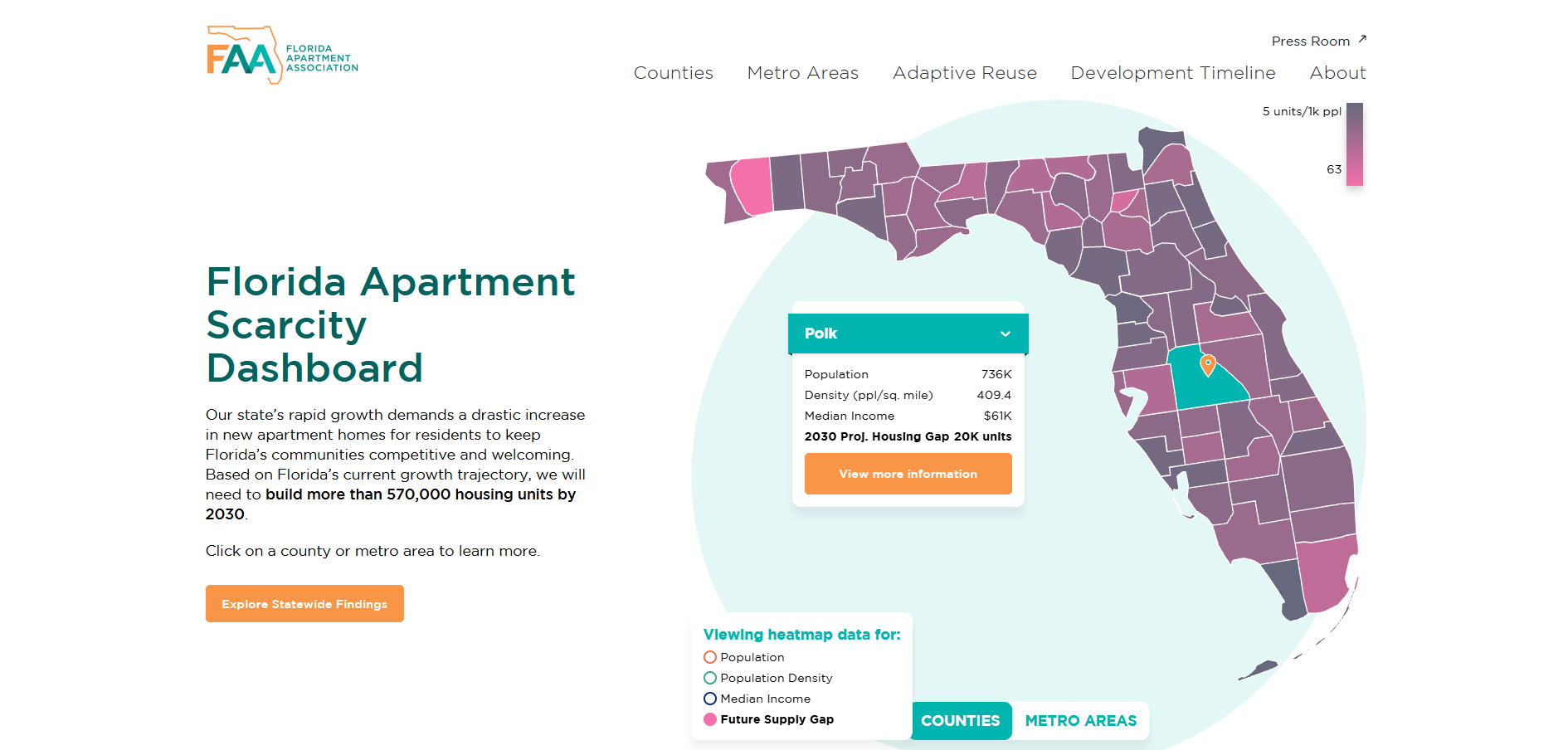
Statewide dashboard tracking population growth, renter share, and projected supply gaps.
The platform:
- Provides county and metro-level views to explore population growth, renter share, and housing supply trends
- Quantifies the total housing gap for all renters by county, including projections through 2030
- Breaks down the gap by income level, highlighting where the shortage hits lower-income renters hardest
- Maps land use data by county, revealing that only 7% of Florida's residential land supports multifamily housing
- Includes policy analysis tools, including a detailed exploration of tax discount mechanisms to begin narrowing the gap
Results & What's Next
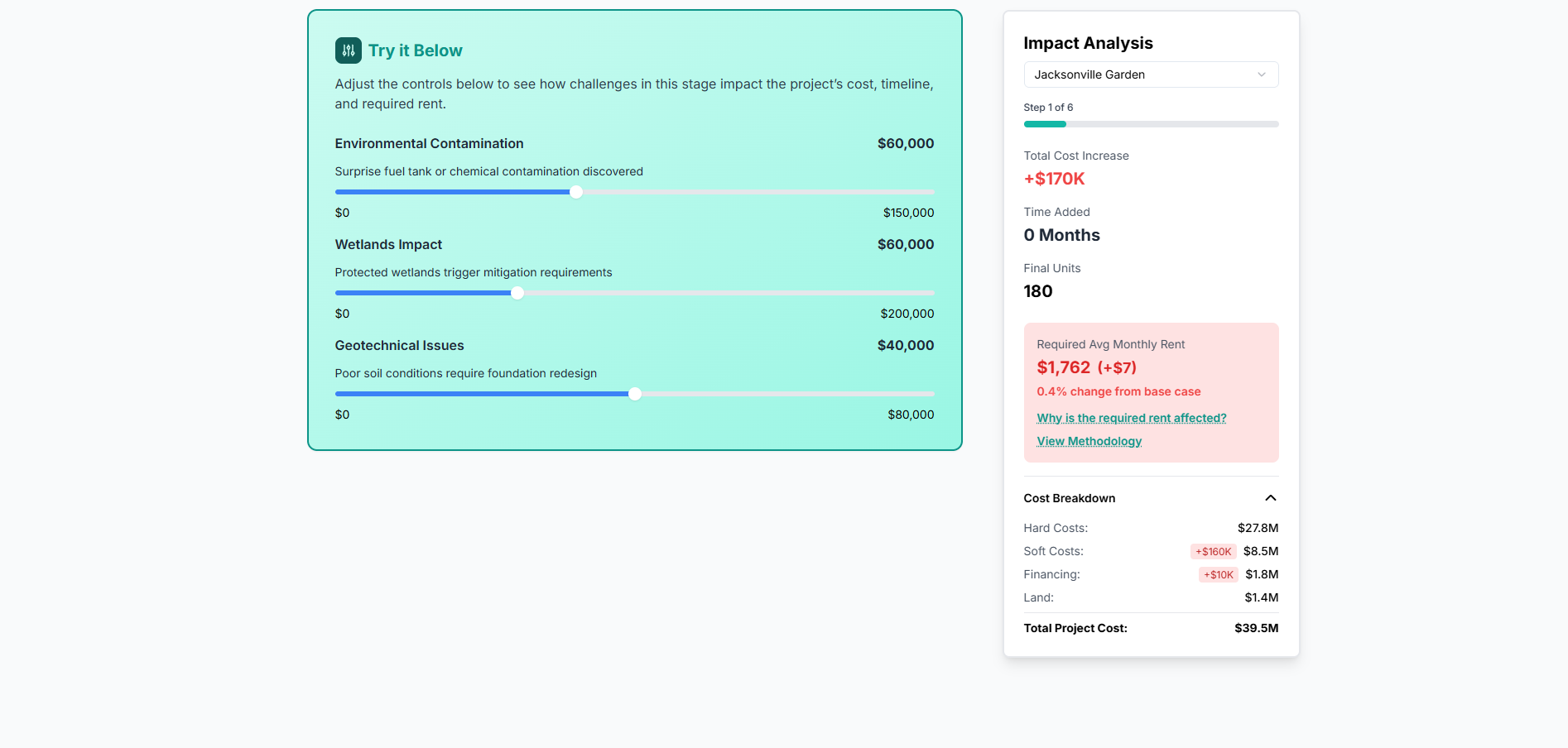
Multifamily development pipeline timeline tracking housing production across Florida.
The dashboard projects that Florida will need to build more than 570,000 housing units by 2030 to keep pace with a projected population increase of 3.2 million residents. State legislators, county officials, and housing developers continue to leverage this tool when advocating for more housing at the local and state level. HR&A updates the tool annually as Florida's housing landscape evolves and new data becomes available.